- Home
- News / events
- Avenue Road
- Biggin
- Buckingham Road
- Census 1841
- Chapels
- Charities & poor relief
- Church
- Church Street
- Directories / descriptions
- Enclosure
- Families / people
- Farms
- Fire insurance
- High Street
- Horn Street
- Maps
- Market Square
- Medieval & 16th century
- 19th-20th Centuries
- Oral history
- Parish Council
- Photographs
- Pubs
- Railway
- Redfield
- Schools
- 17th-18th Centuries
- Sheep Street
- Shipton
- Station Road
- Tanneries
- Tinkers End
- Turnpike
- Vicarage & Verney Roads
- Western Lane
- Wills
- Windmill
- Winslow Hall
- Workhouse / Hospital
- World War One
- Sitemap
- Links
- Search site
- About us / contact

Station Road
The arrival of the railway in Winslow led to the development of Station Road to the north of the existing town. Along with the turnpike and the building of the Workhouse, this completed Winslow's realignment on a north-south rather than east-west axis. The land for the railway itself was acquired by the Buckinghamshire Railway Company in 1847-8. In 1849 they bought nearly 8 acres more from the Selby-Lowndes estate to provide the site for the station and sidings, and the access road which became Station Road. Below is a plan of the land they bought in 1849 on the left (coloured pink) and the equivalent land on the 1880 map on the right (the top is roughly north-east). The railway and new road sliced through several fields and The Spinney (some of which survives).
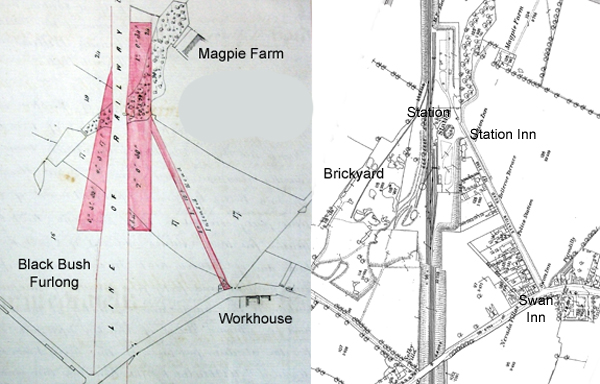
New buildings included the Swan and Station Inns at either end of the road and a brickyard on the other side of the railway. The Cappadocian maple tree which is still there was planted on the land in front of the Station. Station Road was maintained by the Railway Company (the 1893 Vestry was determined that the company should maintain the drains), and in 1903 the Parish Council was still complaining about its poor condition, and asking the Rural District Council to take over. In 1904 the RDC did so with a payment of £400 from the Railway Company (read more). At this point there was a hedge and ditch along the south side of the road, presumably created in 1849. They were removed in order to widen the road.
The Bucks Chronicle reported (28 Dec 1850):
WHAT A RAIL DOES AND DOES NOT DO. – As evidence of the extraordinary changes, and increase of wealth, created in some towns by which new lines of railway pass, we may state that, at Winslow, about 30 capital houses have been built within the last few months – and, as evidence of what blind bigotry, folly, and political tyranny can do elsewhere, there has not, as a result of the introduction of the railway at the town of Buckingham, been so much as an extra brick wall, mud-hut, or pig-stye built, unless for railway purposes.
Bucks Chronicle, 22 Feb 1851:
Our attention has been drawn to a very dangerous nuisance, lately set up at the corner of the new-road leading out of the Buckingham-road down to the Winslow station. The object complained of is two dwarf-posts, which are stuck in the ground, no doubt, to keep vehicles from encroaching upon the path at the angle of the town; but, as they are but a few inches above the ground, and as there are no lamps at all near the spot, although gas-piping is carried to a private house many hundred yards away towards Buckingham, and, in fact down this said new way to the station, too, it is very dangerous indeed – whether on very dark nights or dim hazy ones. Any fat man, nervous woman, or hurrying traveller has only to turn the corner short to stumble and fall, and then think himself well off if mortal damage is not incurred. Then the question would arise – upon whom rests the responsibility of creating a dangerous nuisance?
The station and new road brought extra traffic to the main road, which was still controlled by the Turnpike Trust, as this report shows. Bucks Chronicle, 1 July 1854:
AN ESCAPE. – On Saturday last, a numerously attended meeting of the trustees of the Wendover and Buckingham turnpike-road was held, for the purpose of considering of the propriety of causing a toll-gate to be erected at the station-road, Winslow. The project was, as may be expected, very distasteful to our townsmen. The proposition was, however, much to their satisfaction, rejected, and the traffic allowed to remain free from the objectionable impost.
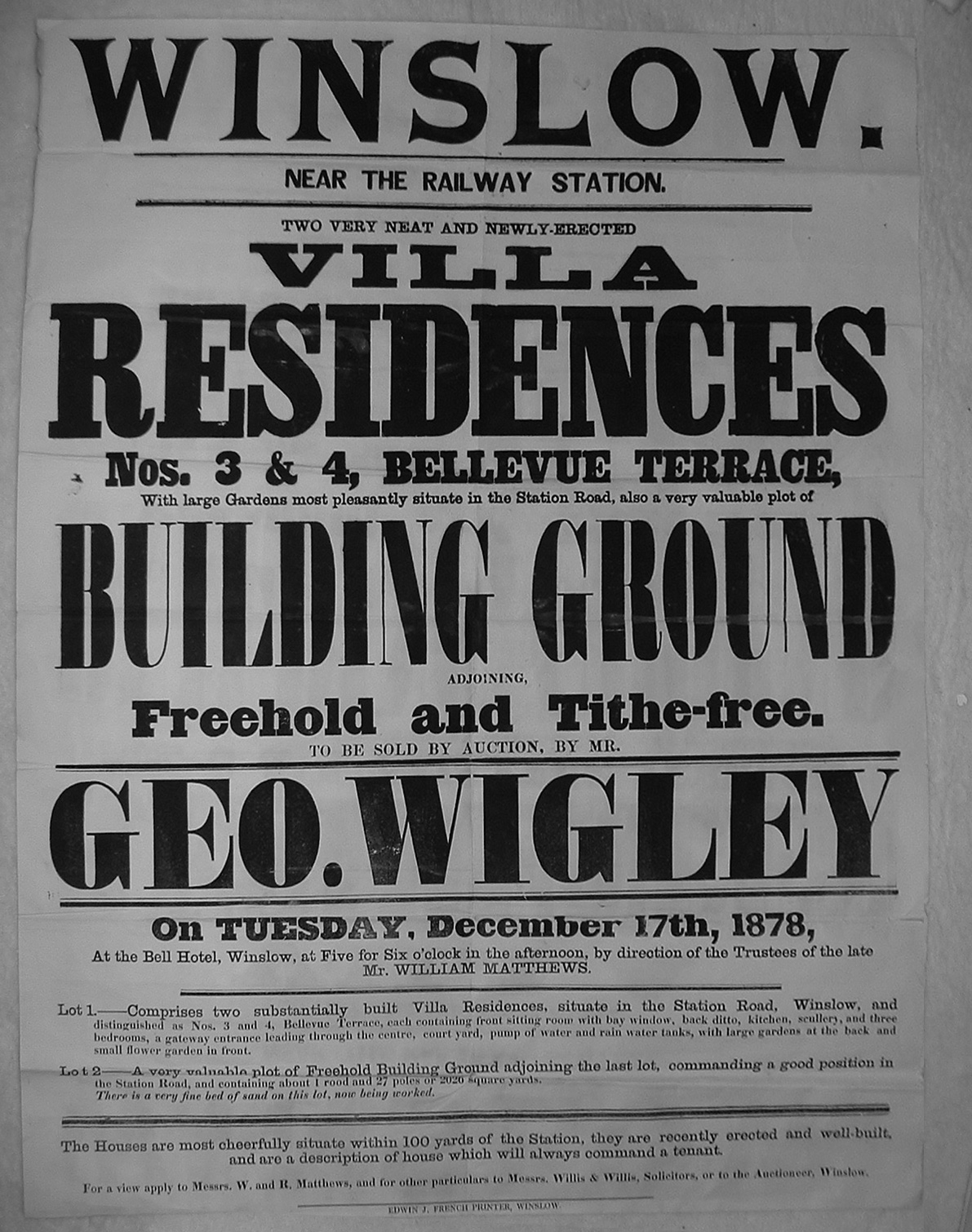
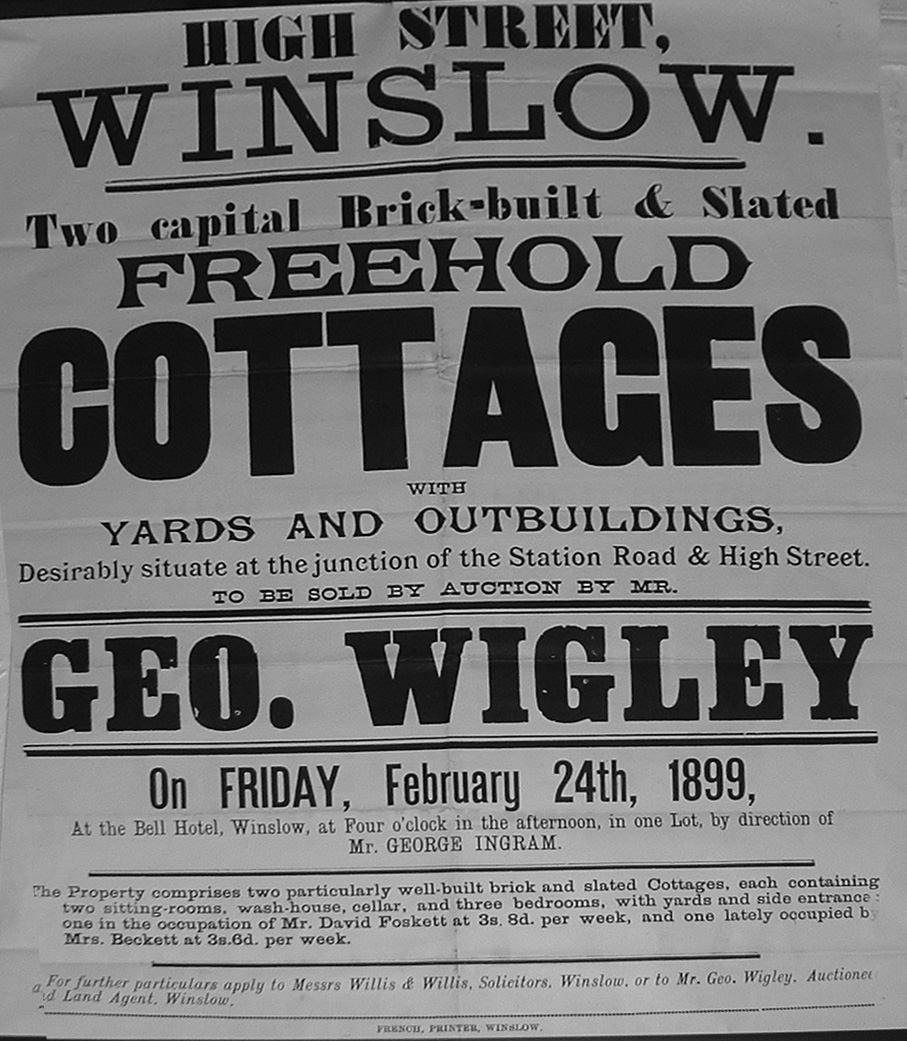
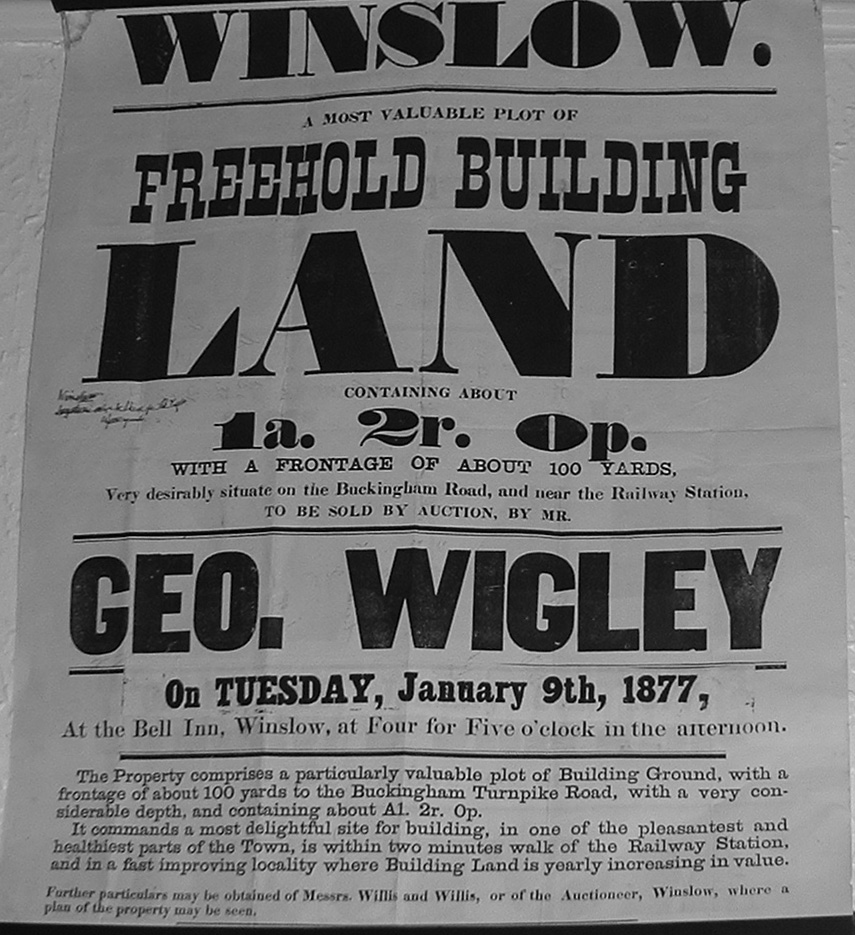
The three sale notices below show how the property market developed in the 19th century (click on the images for the whole documents).
 |
 |
 |
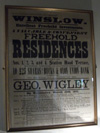 This sale poster from 1896 is on display in the Bell Hotel |
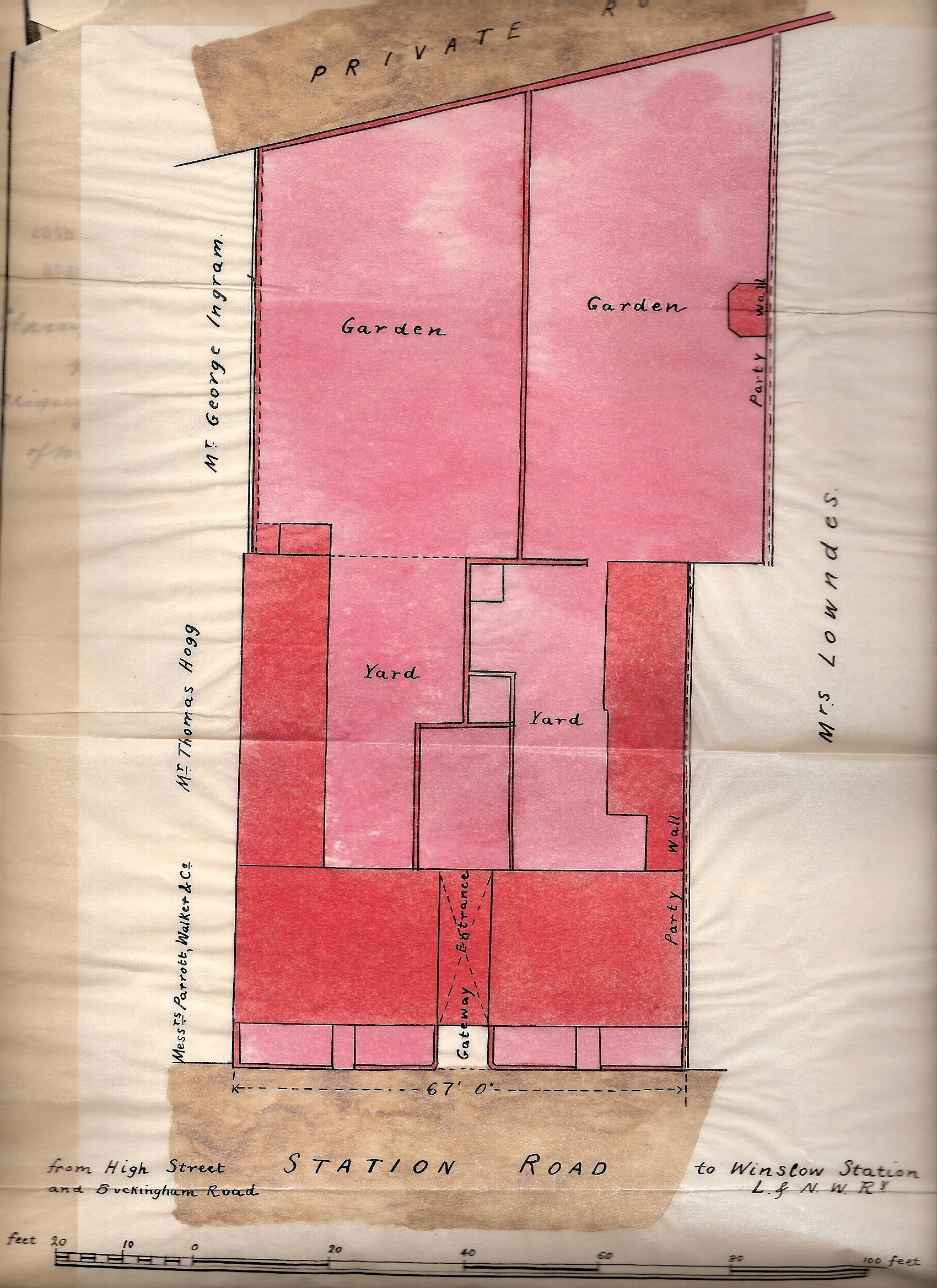
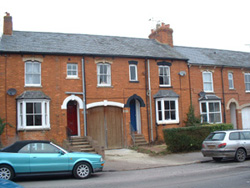
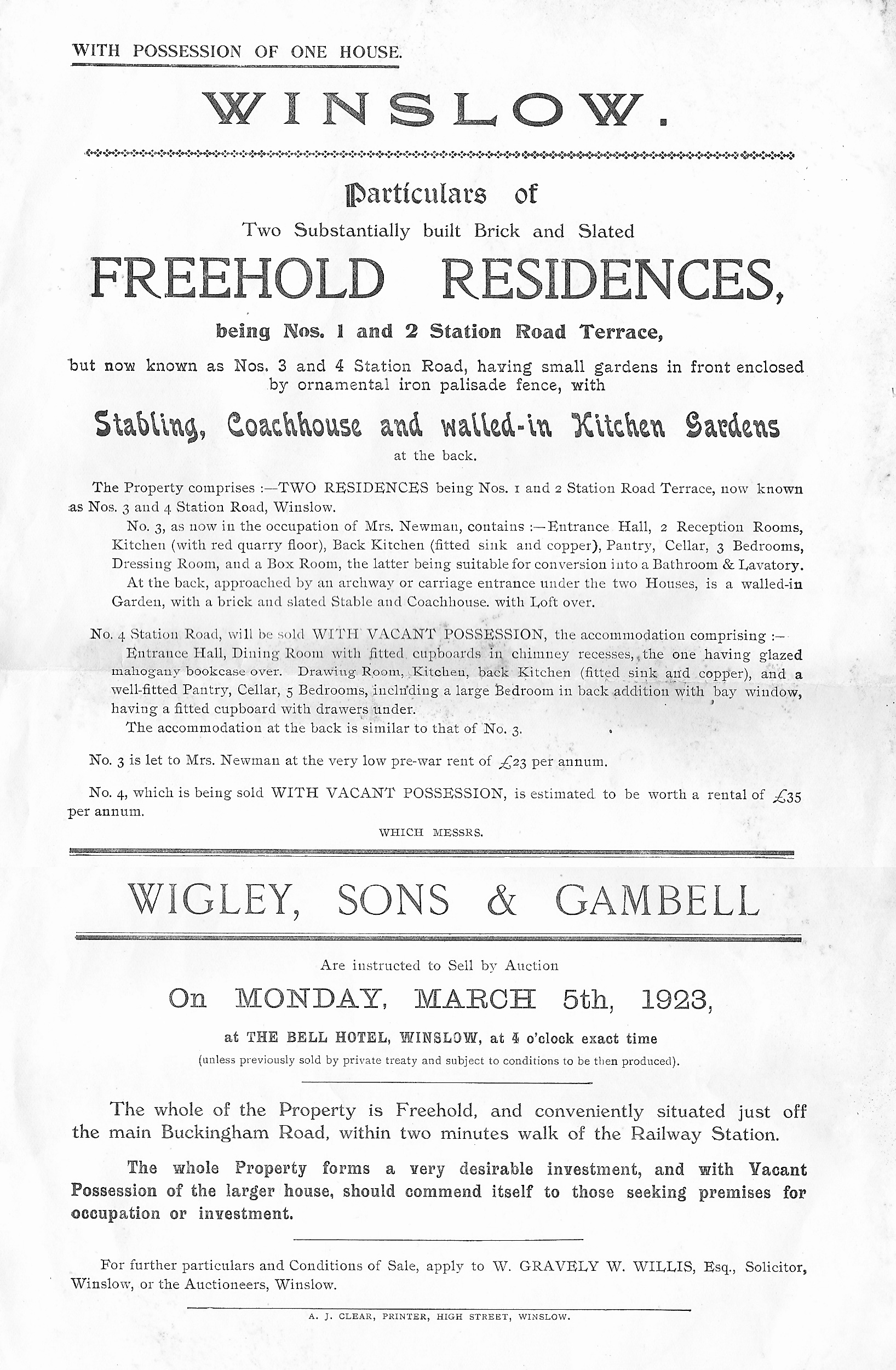 A row of very substantial houses with carriage entrances was built on the north side of the road (now numbers 1-9. Numbers 1-7 (numbered as 1-4 Station Road Terrace) were built in 1851, and sold in 1896 by the executors of William Minter (see above). There are particulars of two of these houses in a sale catalogue of 1923 (click on the image on the right for the whole document; the houses appear to be the present-day nos. 5 & 7). Thanks to the donation of the deeds of 1 Station Road by Mr W. Barbour (they are now in the St Laurence Room archive), we have a full history of that house:
- All four houses built by Thomas Foxley, 1851/2, and mortgaged by him.
- c.1871-6 no.1 was a school kept by Sarah Williams. Richard Lander Williams, whose furniture was advertised for sale in 1880, was probably her husband.
- Sold in 1886 by Misses Eliza and Martha Walker of Lenborough (who had foreclosed on the mortgage) to William Vincer Minter, Master of Winslow Workhouse for £750 (price for nos.1 and 3).
- Purchased from Mr Minter's executors in 1896 by Elizabeth Vincer Cuthbe, widow, Matron of Birmingham Workhouse, for £710 (price for nos.1 and 3). She was Mr Minter's daughter.
- Offered for sale at the same time as T.P. Willis' property. Purchased from Mrs Cuthbe's executors in 1911 by George Ingram and his wife Jane Woolhouse Ingram for £630 (price for nos.1 and 3).
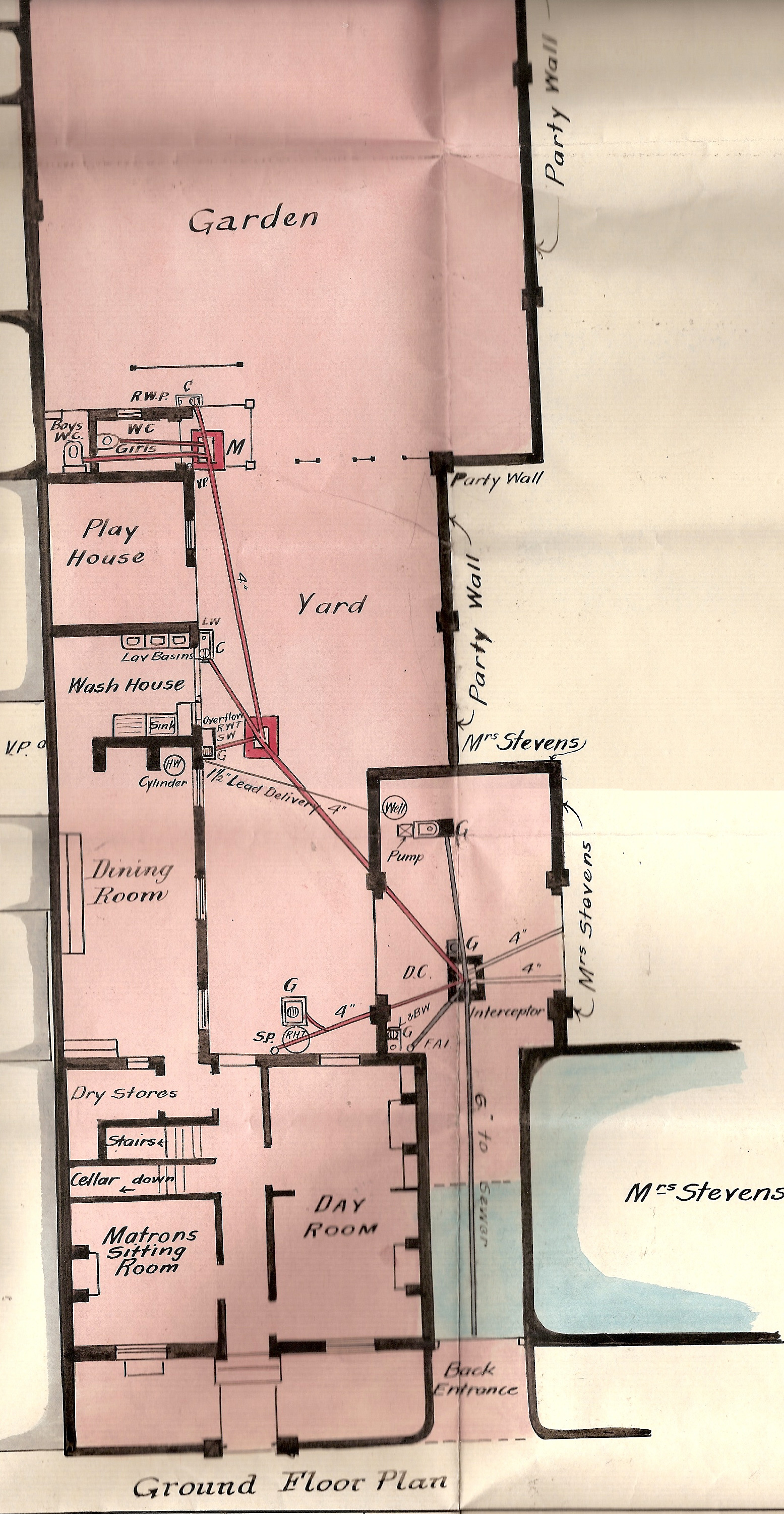
- Leased by George Ingram and his wife Jane Woolhouse Ingram in 1913 to Winslow Board of Guardians for 14 years for use as a children’s home, rent of £26 p.a. No.3 was sold by Mrs Ingram to Miss Elizabeth Ingram in 1914.
- Sold by Mrs Ingram, now a widow, to Winslow Board of Guardians in 1926 for £500 for use as a children's home. Transferred from the Board of Guardians to Bucks County Council under the Local Government Act, 1929
- The children's home closed in 1938 and the house was let to Charlie Walton, stoker at Winslow Hospital, and his family. He and his wife Rhoda lived there until 1966. In 1949 Bucks CC said that it might in future be used as a children’s or old people’s home (which never actually happened). In 1950 they were asked to grant a tenancy to Winslow Hospital Management Committee.
- Sold by Bucks CC to the Ministry of Health in 1954 for £1,500.
- Sold by the Secretary of State for Social Services to Howard Quilter of Prestwood in 1969 for £3,100.
- Converted into four flats which were leased by Station Road Residents Association in 1976.
- According to www.rightmove.co.uk, Flat 3 was sold for £120,000 in 2006 and Flat 2 for £125,000 in 2004.
- Full details of all the deeds in the archive (Word document).
- Click on the images below for plans from 1926:
Plan of nos.1 and 3 Station Road, 1926
|
Plan of the children's home at 1 Station Road, 1926
|
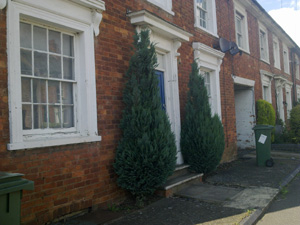
1 Station Road in 2011
|
The north side of the road was developed first, and the houses originally had views across the fields to Shipton (hence the name Bellevue Terrace; see above). The land on which numbers 9-19 now stand was sold by the Selby-Lowndes estate in 1875 as 8 separate plots (Centre for Bucks Studies, D-WIG/2/7/1878/2, and the following advert):
Buckingham Advertiser, 20 Feb 1875
VALUABLE FREEHOLD BUILDING AND GARDEN GROUND, SITUATE CLOSE TO THE STATION; AND SEVERAL HOUSES AND COTTAGES IN THE TOWN
GADSDEN & SON Have been honoured with instructions TO SELL BY
AUCTION,
On MONDAY, 1st MARCH, 1875, at Three for Four o’Clock, AT THE BELL INN, WINSLOW
ABOUT SIX ACRES OF VALUABLE FREEHOLD LAND, which will be divided into convenient sized Lots, with considerable Frontages for Building, and into larger sized pieces for Gardens, situate close to the Railway Station...
Particulars and Plans, with conditions of Sale, may shortly be had on application to Charles Appleyard Esq., 1, New-square, Lincoln’s Inn, London; at the Place of Sale; or of the Auctioneers, Aylesbury
Buckingham Advertiser, 31 March 1877
WINSLOW. Near to the Railway Station.
TWO Very Neat and Newly-erected semi-detached VILLA RESIDENCES, Nos. 1 and 2, Bellevue Terrace, most pleasantly situate in Station Road, with Stabling, Chaise-house, and large Gardens.
TO BE SOLD BY AUCTION, BY Mr. Geo. WIGLEY
On THURSDAY, April 12th, 1877, at the George Hotel, Winslow, at Five for Six o’clock in the afternoon, by direction of the Proprietor, who is leaving the neighbourhood
The Property comprises two very substantially-built Villa Residences, semi-detached, situate in the Station Road, Winslow, and distinguished as Nos. 1 and 2, Bellevue Terrace; with brick and slated stable, chaise-house and loft, with large gardens at the back and small flower garden in front. One is in the occupation of the proprietor and the other let to Mr. George Earthy at £16 5s. per annum, and are Freehold and tithe-free.
The Houses are most cheerfully situate within 100 yards of the Station, they are recently erected and well-built, and are a description of House for which there is a special demand in the town.
For a view apply to Mr. Quelch, and for other particulars to Messrs. Willis and Willis, Solicitors, or to the Auctioneer, Winslow.
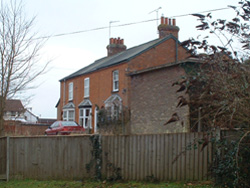
The gasworks were built in 1880 on some of this land, next to the station, replacing the gasworks in the High Street built in 1843 (read more); the Gas House, where the manager lived, and Gas Cottages are still there. See Mrs Lambourne's funeral, 1899 for some information about one of the inhabitants of no.33.
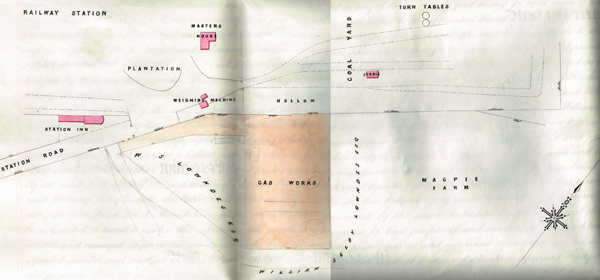
Plan of the gasworks site from the 1880 conveyance. "Hollow" and "Coal Yard" are now McLernon Way.
Conveyance, 4 Nov 1880
Selby Lowndes estate to Winslow New Gas Company Ltd
for £300
All that piece of Ground containing One acre situate and adjoining the Coal Wharf at the Railway Station in Winslow and being a portion of a field formerly called Old Mill Furlong occupied with the remaining portion of the said Field for many years by Ann Curtis and on a part of which piece of ground a Cottage and Gas Works are in the course of erection as the same piece of Ground is staked out and is intended to be fenced off at the expense of the said Company
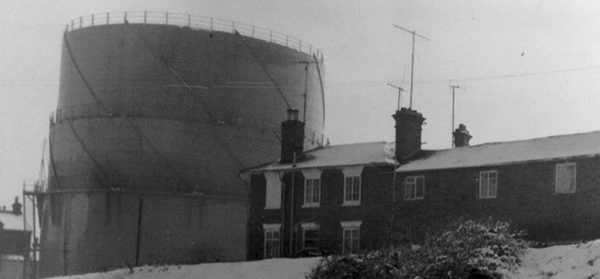
The gasholder and rear of Station Inn, seen from the railway embankment
Northampton Mercury, 14 Aug 1880
NEW GAS WORKS. These are now in course of erection on a piece of ground adjoining the London and North-Western Railway Station. Mr. George Bowyer of St. Neots, Huntingdonshire, is the contractor for the iron work; Mr. Frederick Roads, of Winslow, for the gas-house, and Mr. George Gibbs, of Winslow, for the manager's house and office.
Under the Gas Act 1948 the assets of the Winslow New Gas Company passed to the Southern Gas Board. Winslow R.D.C. granted permission for use of part of the site as a coal depot in 1958.
 |
 |
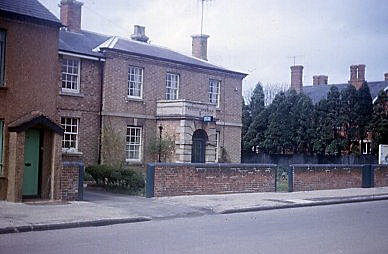
Winslow Police Station, Station Road (built 1854 as the Lock-up, demolished 1984) |
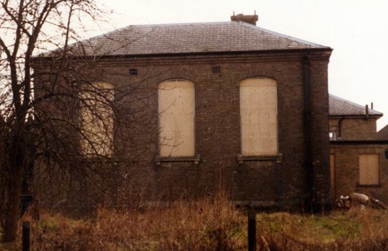
The Magistrates' Court behind the Police Station in 1984 shortly before demolition |
The Lock-up was built on the north side of the new road in 1854. After the Buckingham Constabulary was formed in 1857, this became the Police Station, and the Magistrates' Court was added in 1873 and first used on 11 March 1874 (the site is now Courthouse Close since demolition in 1984).
1873: Bucks Herald, 31 May
TO BUILDERS
PETTY SESSIONS ROOM, WINSLOW, BUCKS.
PERSONS willing to CONTRACT for the ERECTION of a PETTY SESSIONS ROOM and other WORKS in connection with the POLICE STATION at WINSLOW, in the county of Buckingham, are invited to inspect the Plans and Specification and to transmit to me on or before Ten of the Clock of the morning of THURSDAY, the 26th Day of JUNE next, Tenders for the execution of the Works.
The Plans, Specification, and Conditions may be seen at my Office up to and until Wednesday, the 11th day of June inclusive; and after that date at the Office of Messrs. Willis and Willis, at Winslow.
The Magistrates of the County do not bind themselves to accept the lowest or any Tender, and the Person whose Tender may be accepted will be required to enter into a Contract for the due performance of the Works.
ACTON TINDAL,
Clerk of the Peace for Bucks.
County Hall, Aylesbury,
29th May, 1873.
1874: Bucks Herald, 28 Feb
THE NEW PETTY SESSION ROOM at the police station is now completed, and the next court will be held there. The chairman sent for Mr. Neal, of the Bell Hotel, in whose room the justices have hitherto sat, and on the part of himself and his brother magistrates, thanked Mr. Neal for having allowed them the free use of his room for so many years.
The court closed in 1980. Dennis Biscoe, who stayed at the Police Station when his brother-in-law Ralph Beale was stationed there in the late 1940s and early 1950s, provided these reminiscences:
On the left [in the photo above] was a single police officer's quarters, one-up, one-down. Behind the main door was the station office where you went through to get to the single officer's quarters. Also from the office you went into the cells area and from there into the courtroom. Also from the hallway to the cells etc as you went through on the right was a door that was always locked and this was an interior entrance to the sergeant's quarters, which were the three upper windows and the one down to the right of the main door, although there was another entrance on the side. Behind the building itself was a building that was once stables but in the 40s housed the police car. Part of this also doubled up as a coal cellar for the station. There was a storey above that at this time was never used for anything. There was also a three bedroomed house opposite this building. At the back of all this property was a footpath and over the footpath were some allotments one of which was owned by Clarence Smith a market gardener who also had a shop in the Market Square [now the Indian restaurant]. In those days there were three police officers for the Winslow area.
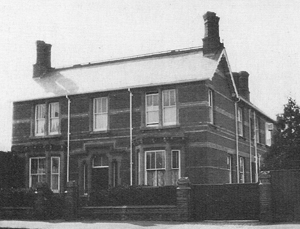
The house next to the Police Station, now Northolme, 23 Station Road, has been altered and the outbuildings were demolished in 2016 due to a development of new houses (now Claremont Close). The photo on the right shows how it looked before the brickwork was covered with white paint, which has now been removed again in a careful restoration of the Victorian exterior. The house was originally called Claremont, built by Charles Clare the coal merchant in the 1870s. He is listed there in the 1881 census with his wife Edith, 3 children and 1 servant. In 1884 it was valued by Wigleys for sale or mortgage to a Mr Pinham or Pinhorn (Centre for Bucks Studies D/WIG/2/1/12; valued again in 1887 for return to Mr Clare). The Lambton family lived there briefly c.1885 before moving into Redfield. In 1891 it had been renamed Northolme, and was occupied by Rolph Creasy, surgeon (general practitioner), his wife Mary, 2 children and 3 servants. Mr Clare evidently retained ownership until he was declared bankrupt in 1900 (Centre for Bucks Studies D/WIG/2/1/35). In 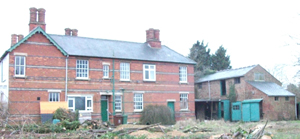 1901 the occupant was Major Fred Coates, "living on own means", his wife Alice and 2 housemaids. He was a J.P., and is still listed in the 1945 telephone directory (tel. Winslow 18). In the 1950s and 60s it was the home of R.R. Bugg the vet, whose practice was in Horn Street. The last owners were Joe and Margaret Lowrey; Mrs Lowrey's recollections of her rally-driving career are on the Oral History page. The side of the house became fully visible in January 2015 after tree clearing (photo on left).
The Creamery opened in 1887 between no.55 (Mandeville Cottage) and the Station Inn (Buckingham Advertiser, 15 Oct):
THE CREAMERY. – The large building in the Station Road, Winslow, erected by Mr. John Ingram for Mr. F. C. Edmunds, of London, was opened, on Tuesday last, as a creamery, and promises to be a convenience to the neighbourhood. The internal arrangements are not quite completed, but the machinery comprises – Two large size De Laval’s patent separators, two refrigerators, double-acting steam pump, donkey pump, four-horse horizontal engine, and eight-horse boiler by E. S. Hindley, of Bourton, Dorset, 600 gallon cistern, churn washing apparatus, &c. Mr. T. Smith is the acting manager.
1904: Buckingham Advertiser, 5 Nov: Winslow RDC
For some time past complaints have been made concerning the Creamery at Winslow. The three worst items appear to be the smoke and soot emitted from the chimney, the blocking of the road to the railway station by the milk-carts, and the contamination of the water in the brook by the unused milk. At last Friday’s meeting of the Rural District Council Mr. Whittle, one of the directors, attended, and his attention was drawn to these matters, and a special committee was appointed to meet him that afternoon at the Creamery to discuss the question and report to the next meeting of the Council.
By the remarks of the Chairman and members, it was evidently apparent that they have not the slightest intention of doing anything to interfere with the progress of business at the Creamery, but at the same time they were willing to recognise the weight of the complaints they had received from owners of property and residents in that part of the town. All three points are of the utmost importance, and though perhaps there may be a desire to somewhat minimise the improvements needed, at the same time it might prove of far greater value and benefit to the company if the matter is dealt with in a thoroughly sound and efficient manner.
Now that this piece of road has been taken over by the Council it becomes a public highway, and, as the Chairman said, it will be their duty to treat it as such in every sense of the term. To say the least, it will be a mere waste of money for the Creamery to deal with the present complaints in such a manner that there would be a recurrence of the nuisance, and undoubtedly the directors and Council will take this point into their careful consideration.
1905: Buckingham Advertiser, 3 June: Winslow RDC
WINSLOW CREAMERY.- The Clerk read a letter from Edwards’ Creamery stating that instruction had been given that no milk was to be allowed to flow into [Great Horwood] brook. - He also read a letter from Capt. Lambton thanking the Council for the prompt action it had taken in the matter. - It was stated that attention must be given to the matter, and that if milk again entered the brook steps would have to be taken to obtain an injunction against the Creamery.
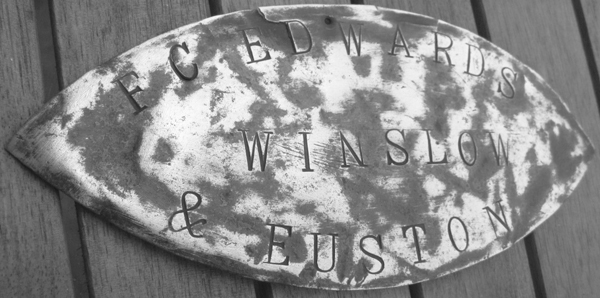
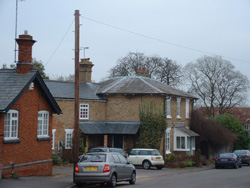
The Station Inn / Hotel was functioning from 1851-1961. Both it and the Creamery belonged to William Neal until they were sold by his executors in 1890. In 1891, 1901 and 1911 the Creamery manager was William Foskett. He lived in Mandeville Cottage (55 Station Road) which belonged to John Ingram. The Creamery itself belonged, probably from 1890, to F.C. Edwards, whose company address was Granby House, Granby Street, Hampstead Road. One of his brass churn labels can be seen below.
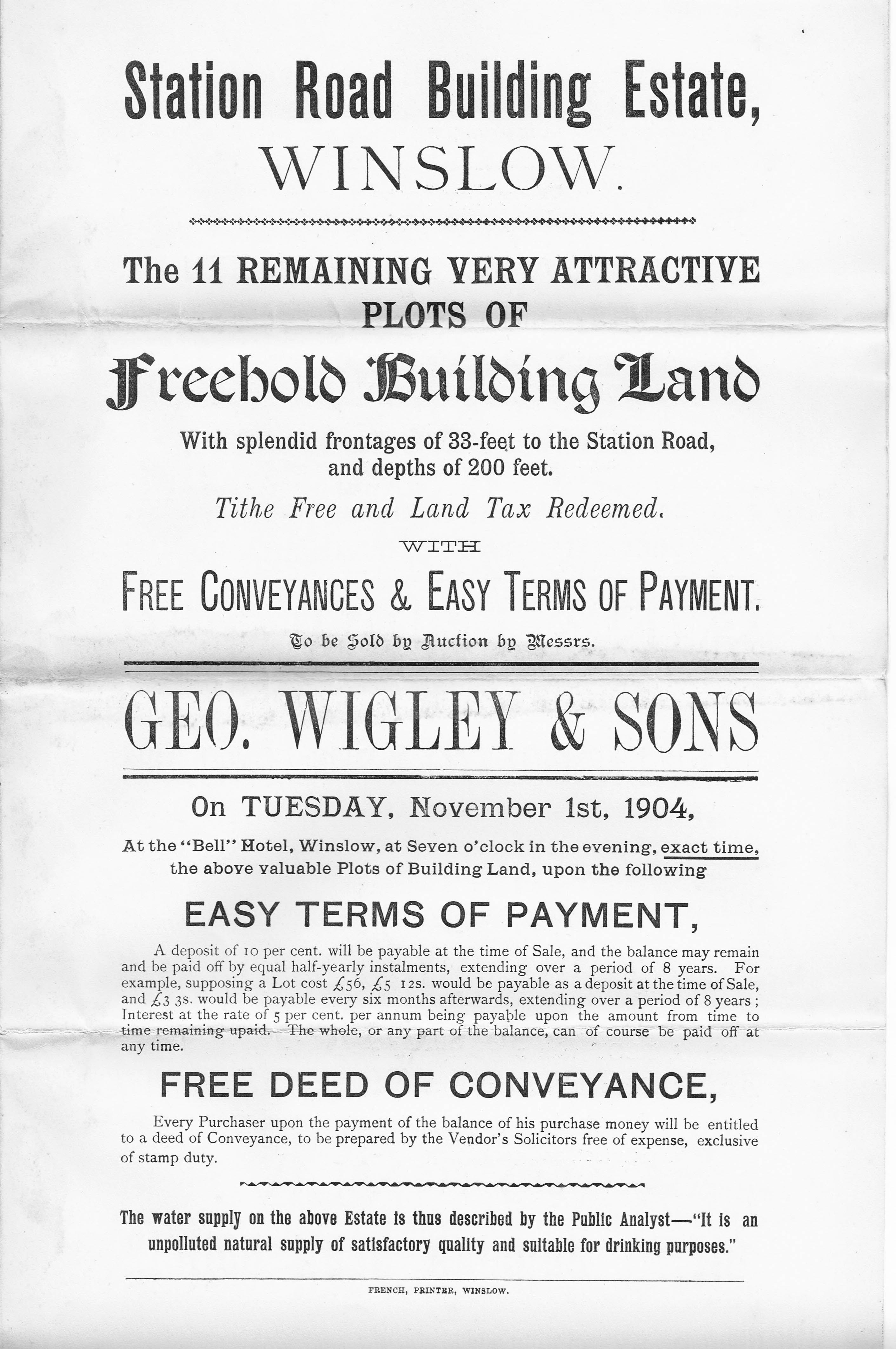
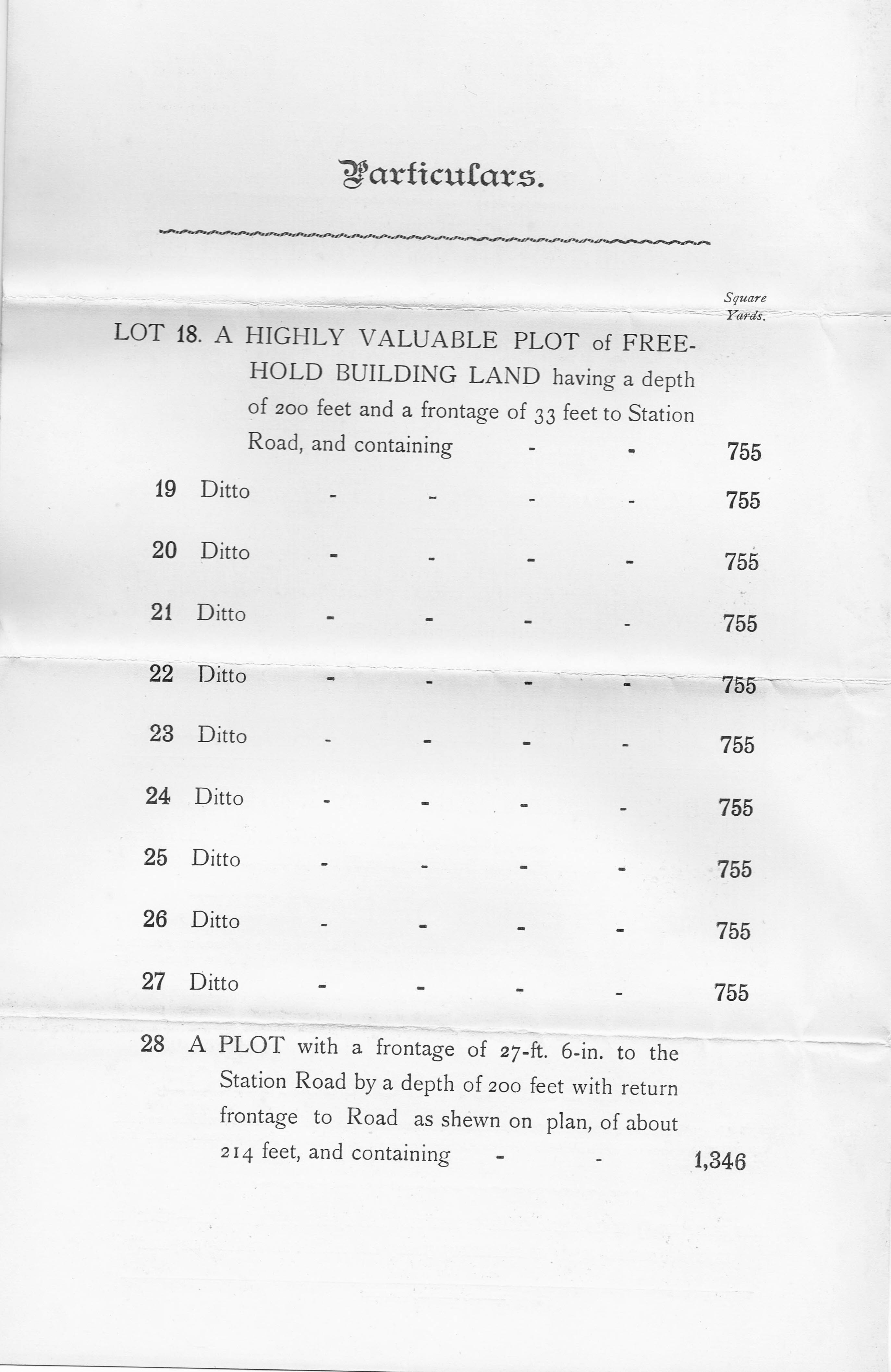
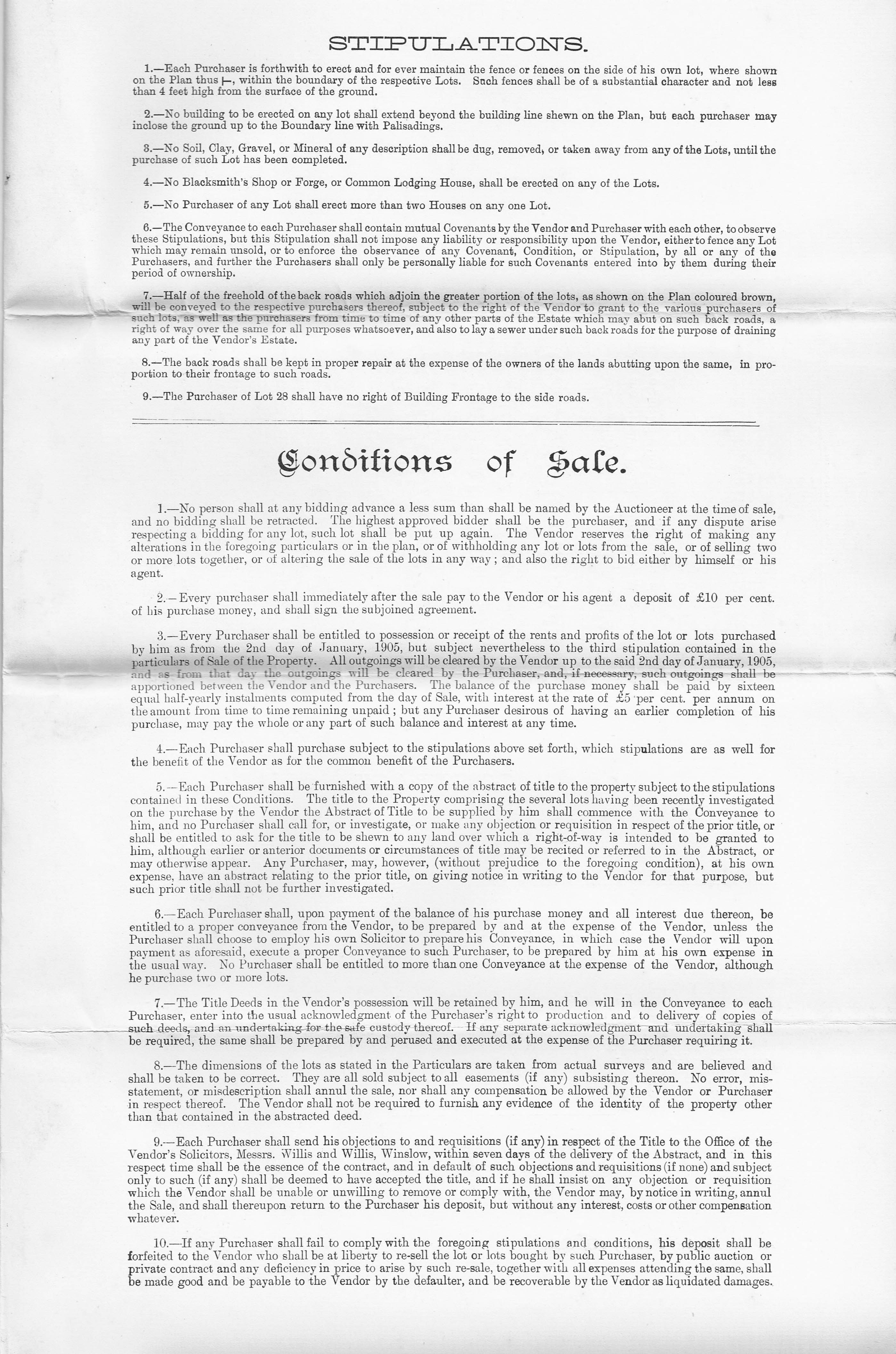
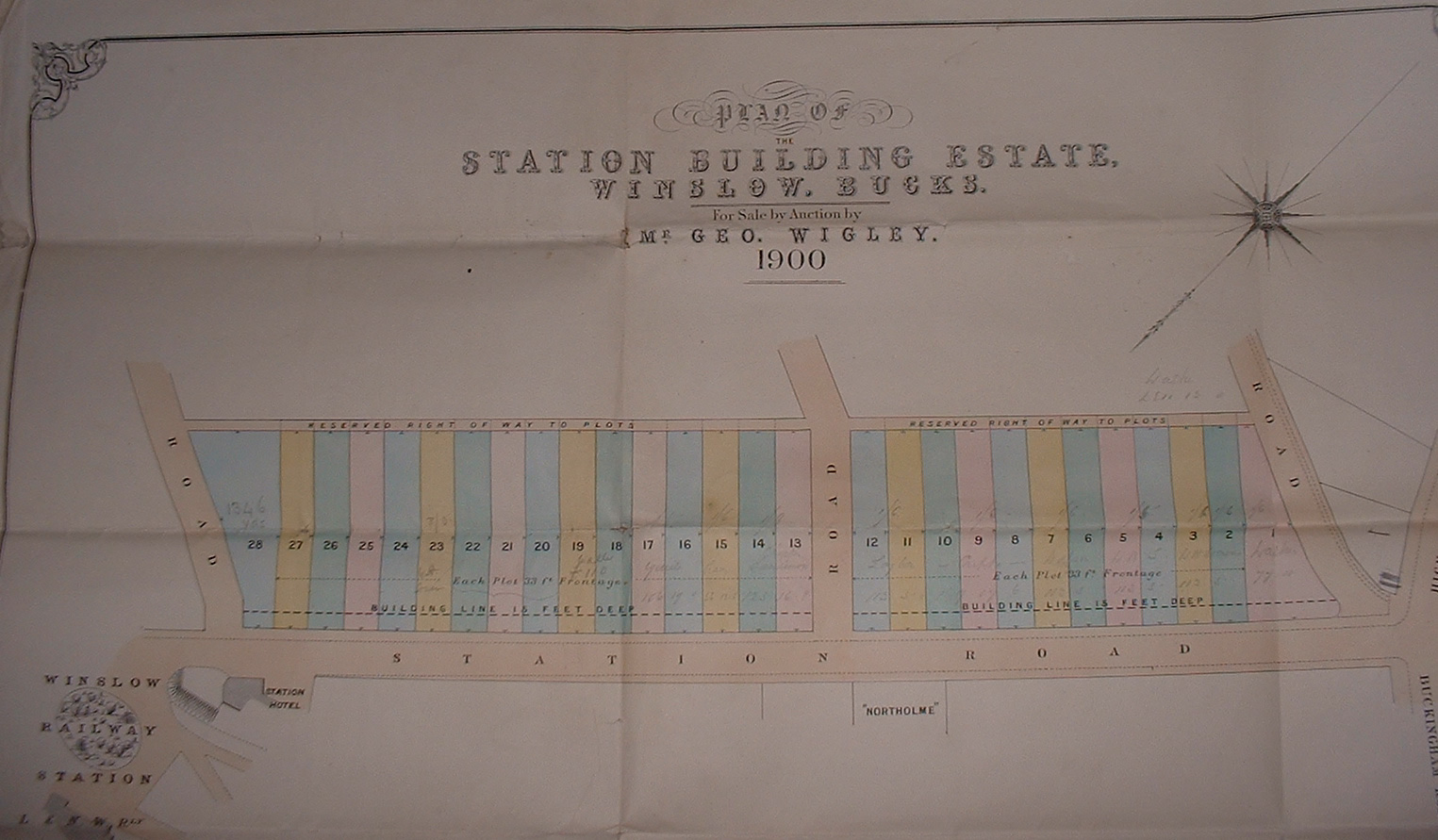
The south side of the road was developed from the early 1900s after the sale of the "Station Building Estate" in 28 lots in 1900 (John Varney the veterinary surgeon built Newlands, no.30, on one of these in 1901), and another sale of 11 remaining plots in 1904. The latter now form the row of houses starting from no.4. The conditions of sale prohibited building a blacksmith's forge or common lodging house. Click on the images below for the 1904 sale catalogue.
 |
 |
 |
Some of the land remained in agricultural use for several years.
1908: Buckingham Advertiser, 30 May
STATION ROAD BUILDINGS ESTATE.
Messrs. GEO. WIGLEY & SONS Are instructed to Sell by Auction On WEDNESDAY Next June 3rd, 1908,
THE Luxuriant CROPS of CLOVER and GRASSES, about 6 Acres, first and second cut to go off.
The Company will oblige by meeting the Auctioneer on the land at 3 o’clock EXACT TIME.
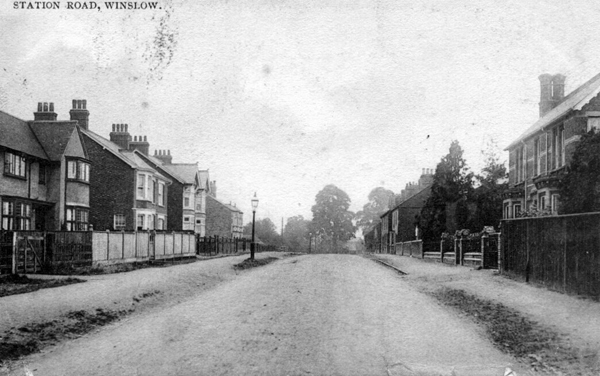
This view looking back along the road towards the High Street shows some of the first buildings on the south side including (far left) Newlands, built in 1901 by John Varney the vet.
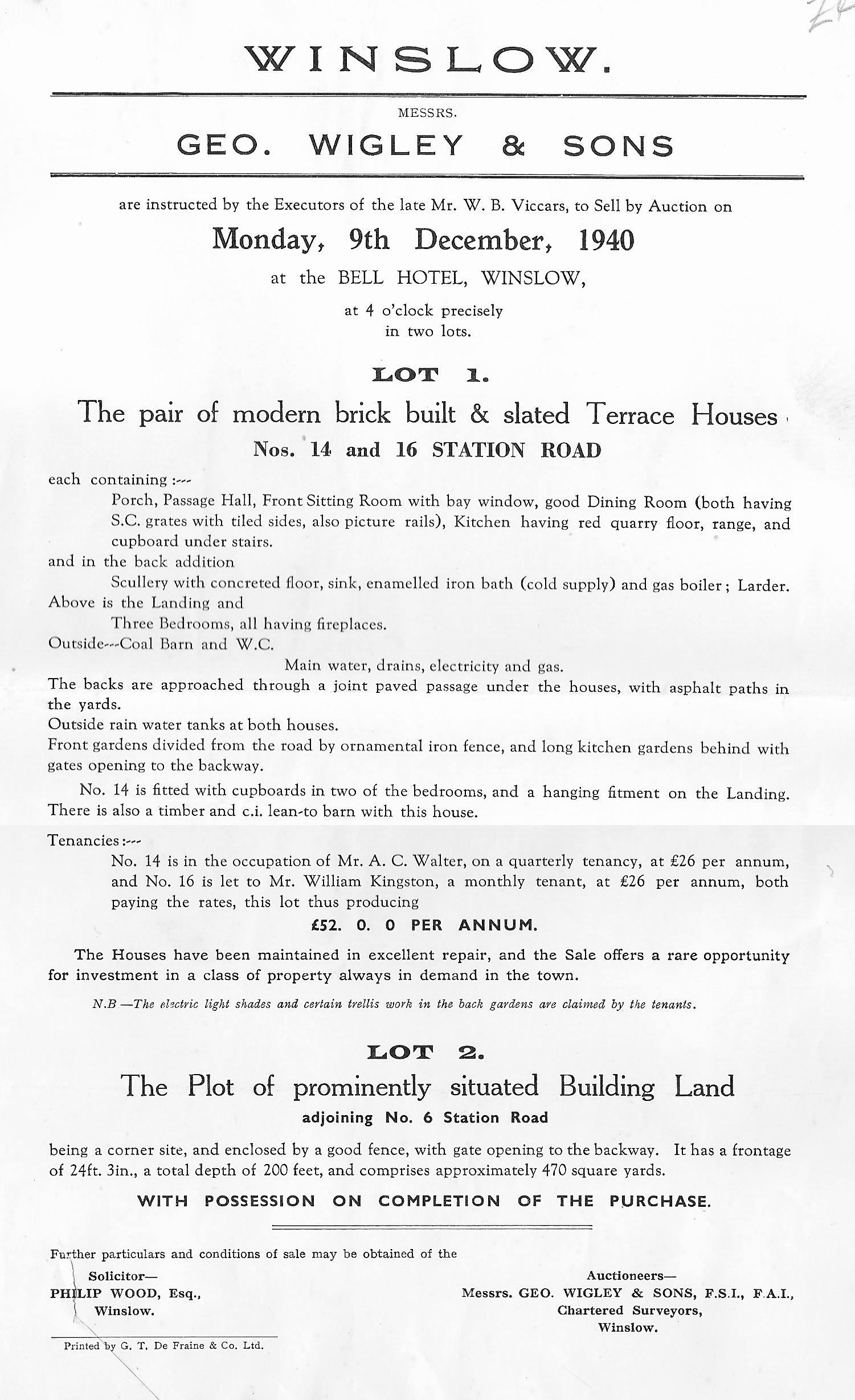
Most of the houses were built in pairs, and the sale of two of them (numbers 14-16) in 1940 shows some of the details (the building plot referred to is now the site of no.4). The sale of three small houses on the north side in 1942, along with houses in Avenue Road and the High Street and some "garden ground" which is now part of Courthouse Close, is recorded in another catalogue. Click on the images below for the whole documents.
 |
 |
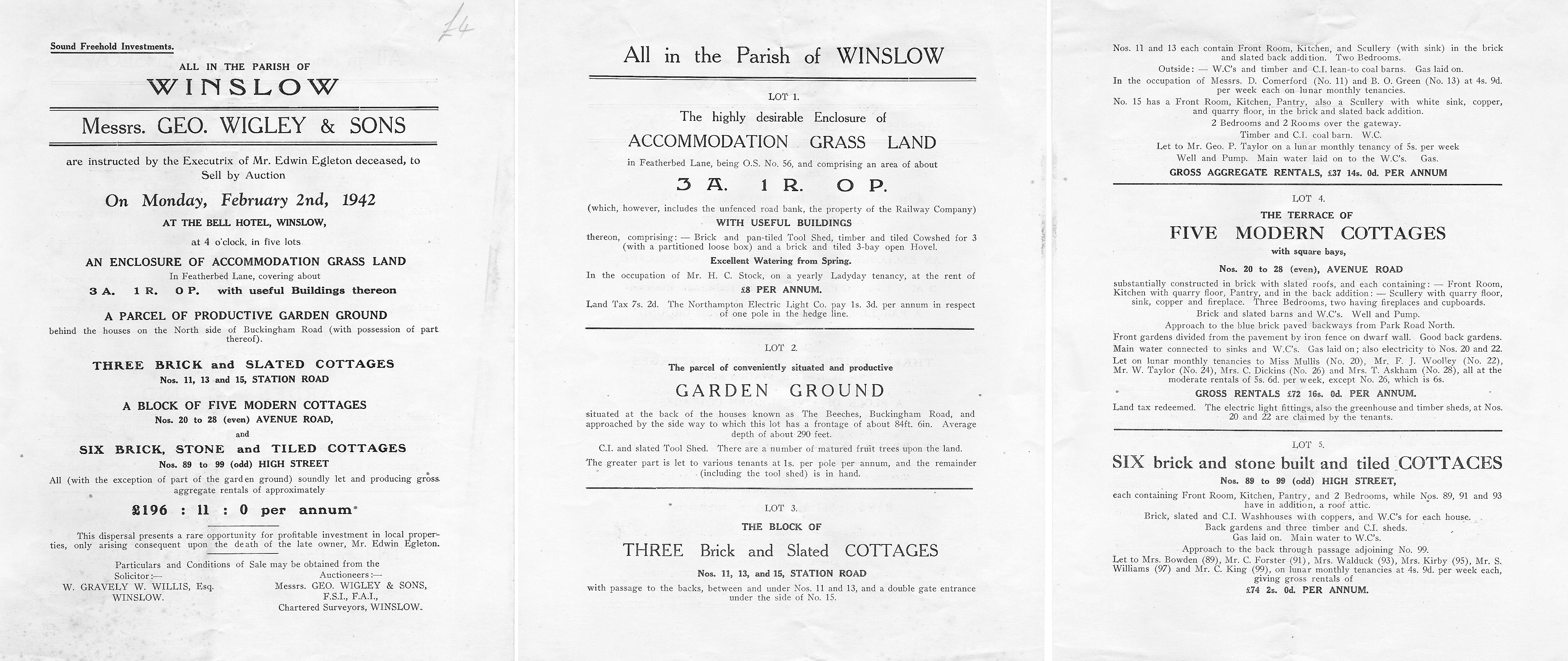 |
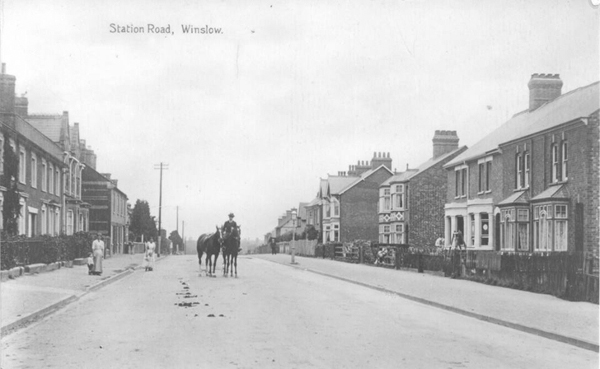
This view shows the road c.1906 before the last pair of houses was built.
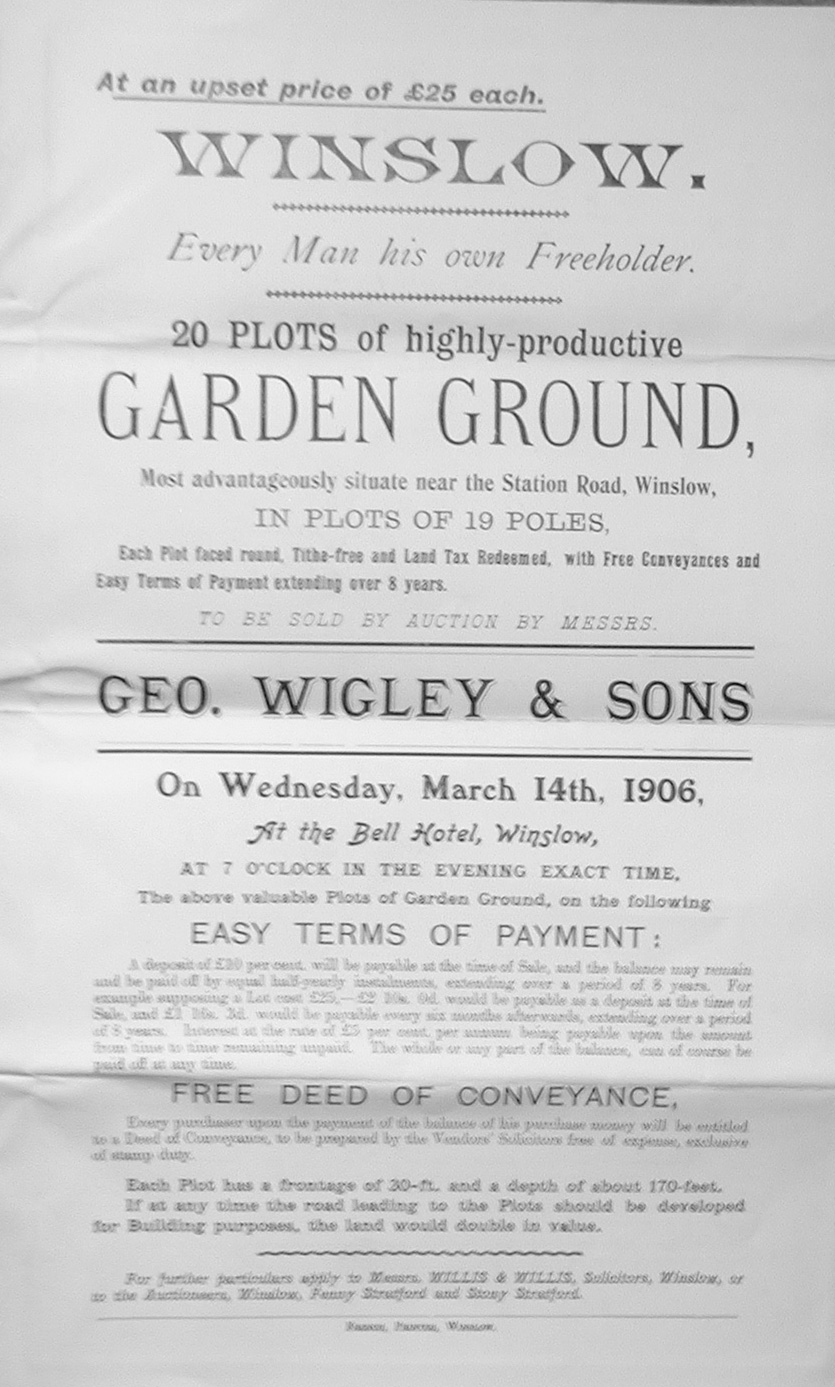
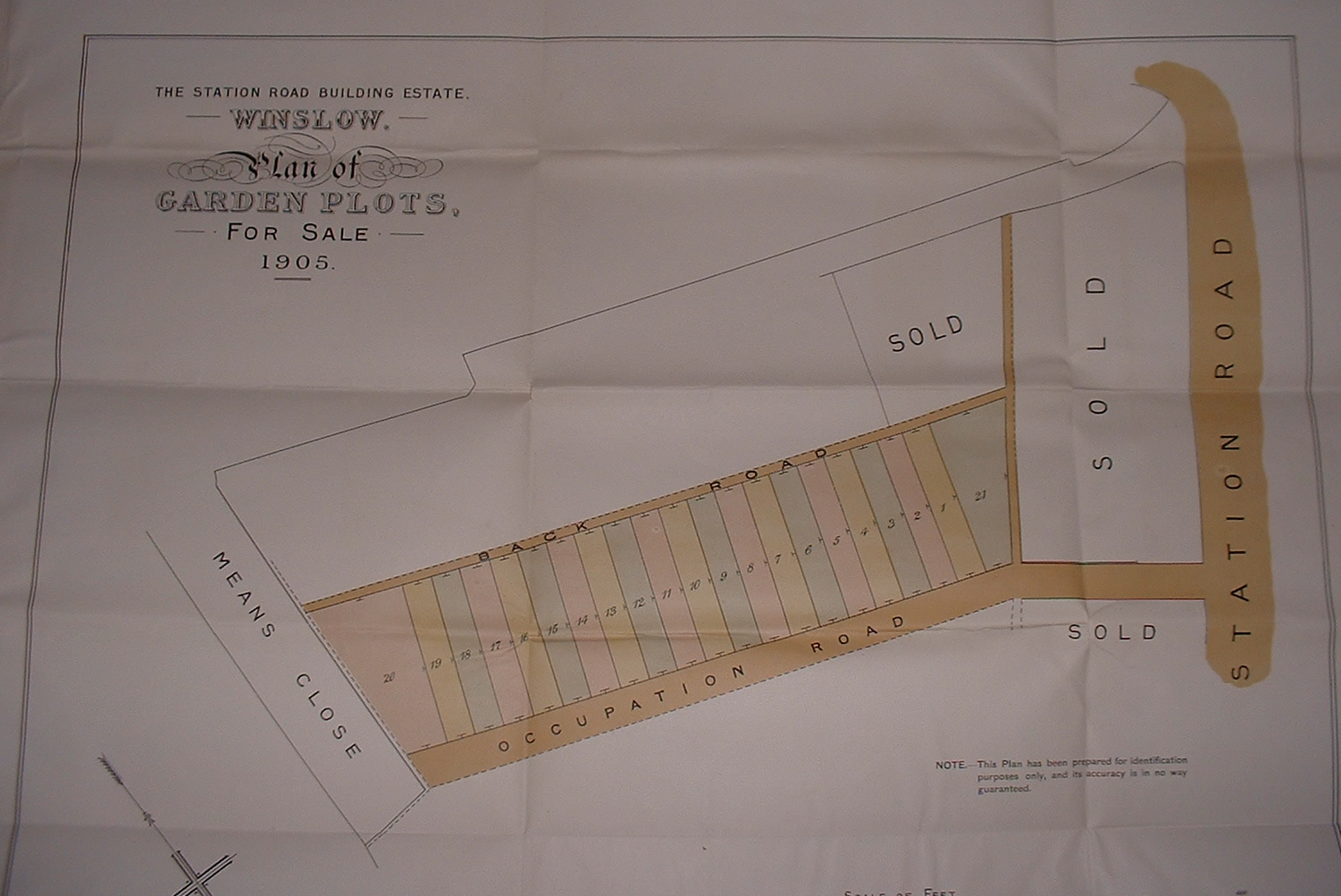
More land to the south of Station Road was sold as garden plots in 1906, and the sale particulars show the layout of the road at that time. It was apparently still being used as farmland in 1908:
STATION ROAD BUILDINGS ESTATE.
Messrs. GEO. WIGLEY & SONS
Are instructed to Sell by Auction,
On WEDNESDAY Next, June 3rd, 1908,
THE Luxuriant CROPS of CLOVER and GRASSES, about 6 Acres, first and second cut to go off.
The Company will oblige by meeting the Auctioneer on the land, at 3 o’clock EXACT TIME.
This land became the Lowndes Way estate in the 1970s. Click on the images below for the whole sale catalogue ("Occupation Road" is roughly the line of Lowndes Way).
 |
 |
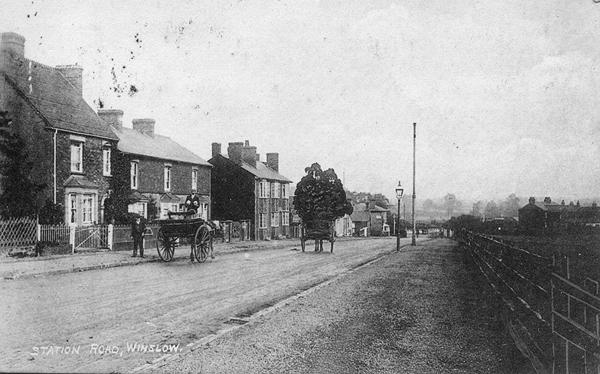
The lower end of Station Road. The Station Inn is visible in the middle (to the left of the lamp post) and Gas Cottages on the far right
 |
 |
 |
The former Bellevue Terrace |
The former Station Inn |
Gas Cottages; the Gas House is out of sight behind the cottages, and the gasholder was to the right |
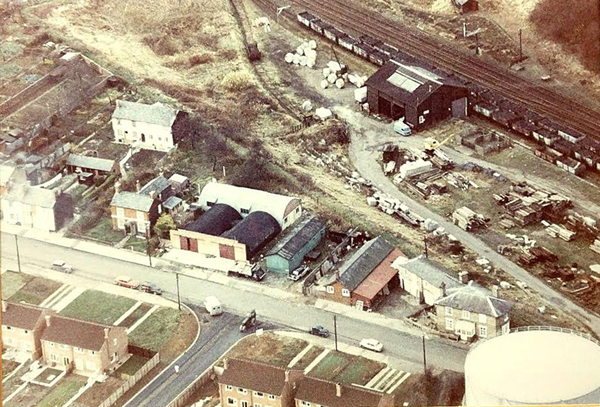
The photo below shows the end of Station Road in 1963, including the gasometer, the former Station Inn, station yard and the buildings on the site of the Creamery, one of which (with the white roof) was the North Bucks Salvage Company run by Teddy Vine.